


What is Financial Analytics?
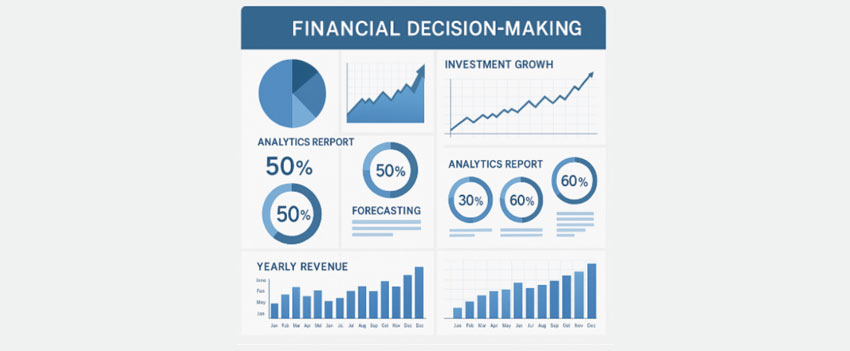
Financial analytics is the process of using data, statistical models, and analytical tools to understand an organisation’s financial performance and guide strategic decisions. It goes beyond traditional accounting by transforming raw financial information into meaningful insights that help businesses evaluate profitability, forecast future outcomes, measure risks, and optimise resource allocation. Through real-time dashboards, predictive models, and scenario analysis, financial analytics enables managers to identify trends, uncover inefficiencies, and make decisions that are both data-driven and forward-looking.

“In the world of business, those who understand the numbers shape the future.”
Today, this quote resonates more than ever. The corporate world is undergoing one of the biggest shifts in hiring philosophy. For decades, degrees, job titles, and past designations acted as the primary indicators of talent. But in 2025, these traditional markers no longer guarantee performance or potential. As companies face rapid digital transformation, AI integration, and evolving business models, the spotlight has turned toward a new priority: skills.
Skills-based hiring has become one of the most influential HR trends globally. More than half of organisations now rely on skill assessments, simulations, and competency frameworks to identify the right talent. The message is clear—what a person can do matters far more than what is printed on their certificates.
Why the Shift Toward Skills-First Hiring?
Financial analytics has rapidly become one of the most transformative tools in the modern business environment. As organisations face rising competition, shifting market conditions, and increasing pressure to operate efficiently, relying solely on traditional financial reports is no longer enough. Decision-makers today require faster insights, deeper analysis, and predictive capabilities—and financial analytics provides exactly that.
For MBA students preparing to enter the corporate world, understanding financial analytics is now as essential as mastering core concepts like budgeting, valuation, or working capital management. It equips future managers with the ability to interpret data, anticipate trends, and guide organisations toward informed and strategic decisions. As businesses evolve into technology-driven ecosystems, financial analytics stands firmly at the centre of managerial decision-making.
New Era of Strategic Decision-Making
Financial analytics has shifted organisations away from intuition-based decisions toward structured, data-driven strategies. By analysing performance in real time and evaluating future possibilities, businesses can make proactive choices instead of reacting to problems after they arise.
Leaders can now assess how changes in pricing, cost structures, market trends, or customer behaviour influence long-term outcomes. This enables companies to allocate resources more effectively, identify profitable opportunities, and avoid decisions that could lead to unnecessary risks. In many ways, financial analytics helps decision-makers look beyond the numbers and understand the story those numbers reveal.
More Reliable Forecasting and Planning
Forecasting and planning have always been central to financial management. However, traditional forecasting methods—often based on limited historical data and simple assumptions—are no longer adequate in today’s rapidly changing environment. Financial analytics enhances forecasting precision by incorporating real-time data, statistical models, and scenario-based techniques.
Instead of relying solely on past performance, businesses can now evaluate multiple, dynamic factors such as shifting consumer behaviour, market volatility, cost fluctuations, and external risks. This results in more realistic, flexible, and actionable planning. MBA students aiming for careers in Financial Planning and Analysis (FP&A) or strategy will find analytics-driven forecasting to be a core expectation.
Improved Risk Management and Financial Controls
Every organisation faces financial risks related to credit, liquidity, operations, or market disruptions. Financial analytics plays a vital role in identifying these risks early. By analysing patterns and anomalies in financial data, companies can detect issues that may not be visible through traditional review methods.
Risk teams now use analytics to evaluate financial health, anticipate disruptions, and build better internal controls. This enhances organisational resilience and enables more confident decision-making. As risk management becomes increasingly sophisticated, professionals with strong analytical and financial skills are in high demand.
Enhancing Cost Management and Operational Efficiency
Financial analytics helps organisations understand their cost structures at a deeper level and identify inefficiencies across operations. By examining expense patterns, performance metrics, and profitability ratios, companies can pinpoint where improvements are necessary.
Financial analytics enables organisations to:
- Identify unnecessary costs or leakages
- Evaluate product or service profitability with greater accuracy
- Optimise resource allocation for maximum impact
These insights support better decision-making and drive sustainable growth. For MBA students, learning to interpret cost analytics significantly enhances managerial effectiveness.
Customer-Centric Approach to Financial Decisions
Customer behaviour has a major influence on financial performance. Financial analytics allows organisations to combine financial data with behavioural insights to better understand customer profitability, spending patterns, and lifetime value.
With this integrated view, businesses can create targeted pricing strategies, personalise offerings, and strengthen customer relationships. Financial analytics helps decision-makers answer critical questions such as:
- Which customers contribute the highest long-term value?
- What pricing strategies maximise both revenue and satisfaction?
This customer-focused financial approach ensures that companies remain competitive in an environment where expectations are constantly evolving.
Supporting Real-Time Decision-Making
One of the greatest advantages of modern financial analytics is the delivery of real-time insights. Traditional financial reporting often involved delays, limiting a leader’s ability to respond quickly to emerging issues. Today, digital dashboards and analytics platforms provide immediate visibility into key metrics.
Real-time insights empower organisations to adjust budgets promptly, respond to deviations, and make faster strategic decisions during uncertain market conditions. This agility is especially valuable in industries that move rapidly, where slow responses can lead to missed opportunities or increased exposure to risk.
The Rise of the Analytics-Driven Finance Professional
AI and data analytics are not replacing finance professionals—they are transforming the expectations placed upon them. Today’s finance roles require the ability to interpret complex datasets, validate analytical models, and use insights to support strategic initiatives. The combination of financial knowledge and digital fluency is becoming essential.
The new-age finance professional is expected to demonstrate:
- Strong analytical thinking and numerical reasoning
- Strategic problem-solving skills
- Comfort with financial technologies and data tools
- Adaptability and continuous learning
MBA students who develop these capabilities will be well-positioned to lead in a business environment that increasingly depends on data-driven decision-making.
Why Financial Analytics Is Important for MBA Students
For MBA students, financial analytics is far more than an academic subject—it is a critical career skill that determines future employability and leadership potential. As organisations shift toward evidence-based decision-making, managers who can interpret financial patterns, evaluate performance metrics, and convert data into actionable strategies are highly valued.
Financial analytics bridges the gap between classroom theory and practical business application by enabling students to analyse real-world scenarios, predict outcomes, and offer informed recommendations.
Whether pursuing finance, consulting, marketing, operations, or entrepreneurship, the ability to understand financial data gives MBA students a powerful competitive edge. It allows them to contribute meaningfully to strategy, optimise resources, and make decisions that drive measurable results.
It helps in….
- Bridge between theory and practice
- Career versatility
- Leadership readiness
Final Thoughts
Financial analytics has become an essential pillar of business decision-making. By transforming raw data into meaningful insights, it enables companies to plan more effectively, manage risks intelligently, optimise operations, and stay competitive in a rapidly evolving marketplace. For MBA students, mastering financial analytics is not just a requirement—it is a pathway to becoming strategic leaders.
Those who adopt an analytics mindset, understand financial models, and develop strong decision-making skills will stand at the forefront of organisational success in the years ahead.
Post a New Blog